



Whoa!
Okay, so check this out—I’ve been poking around Solana explorers for years and the difference between a good tool and a frustrating one is night and day. My instinct said something felt off about dashboards that hide important context, and I kept running into explorers that were flashy but shallow. Initially I thought raw transaction lists would be enough, but then I realized that without layered analytics you miss the story behind movement. Wow, that part bugs me—because numbers without context are just noise.
Seriously?
Yes. Sol transactions can look chaotic at first glance, though actually there’s logic you can tease out if you know where to look. The trick is combining on-chain tracing with smart filters and token-level insights. Here’s the thing. You want to know not just that SOL moved, but who moved it, why (to the extent you can infer), and what followed.
Hmm…
Let me give a quick, real-feeling example that might ring true if you use Solana regularly. A few months ago I watched a wallet push a torrent of small SOL transfers that looked like spam, and my first impression was “dusting attack.” But then I dug deeper and found the same wallet interacting with a token program that aggregated fees—so that simple narrative fell apart. Initially I thought tracking fees was a background task, but then I realized fee flows often reveal aggregator bots and market makers. On one hand that’s fascinating; on the other hand it’s annoying when dashboards obfuscate it.
Here’s the thing.
Good explorers treat transactions like stories: who started it, what programs participated, and what token state changed. A token transfer line alone is incomplete. You want program traces, inner instructions, block time, and signature status visible in one view. When you can pivot from a transaction to an account’s token balances and to related transactions, patterns emerge. My head nods when I see tools that let you pivot fast—because speed matters, especially when debugging or auditing.
Whoa!
Solana analytics isn’t just charts. It’s signal processing—filtering noise, surfacing clusters, and labeling repeated behaviors. Medium-sized clusters of transactions with similar metadata often mean bots. Long sequences where an account interacts with many liquidity pools usually indicates a market-maker or aggregator, and seeing that helps you trust or distrust an address. I’m biased, but I prefer explorers that combine raw data with simple machine inference so users aren’t guessing. Somethin’ about a red flag icon goes a long way.
Really?
Yes—and here’s where token tracker functionality becomes crucial. You can trace a token’s entire lifecycle: mint, distribution, major holders, and movement between exchanges or bridges. That matters for tokenomics research and for spotting rug pulls early. I once watched a token’s top holders shift massively over a weekend (very very suspicious), and the token tracker timeline made the suspicion actionable. It saved me from a bad trade—so that part felt personal.
Hmm…
From a technical angle, effective explorers index both confirmed and finalized states, and then present the difference. That lets you see pending rebakes or partial finalizations without hunting through RPC logs. Initially I assumed finality on Solana was straightforward, but then I remembered forks and replay behavior that can cloud short-term state. On one hand finalization is fast; on the other hand it’s nuanced when high throughput and validators disagree—so good tools expose confirmations, not just one binary status.
Here’s the thing.
If you’re tracking SOL transactions for compliance, analytics, or dev debugging, you need several views: raw tx list, program trace, token movements, and visualized flows. Visual flows—Sankey-style or directed graphs—are underrated. They make it obvious when a token line funnels to an exchange or when a wallet is acting like a drain. I like explorers that offer exportable CSVs and API access too, because sometimes you want to run your own analysis in Python or R. I’m not 100% sure everyone will use that, but advanced users will thank you.
Whoa!
Okay, practical tips for a better workflow. First, always inspect the “inner instructions” for any complex transaction; that’s where sol transfers often hide inside program calls. Second, use balance history rather than a snapshot; that shows accumulation patterns. Third, check associated token accounts to find wrapped or staked versions of SOL that aren’t obvious at first glance. These steps are quick and they often change the narrative.
Seriously?
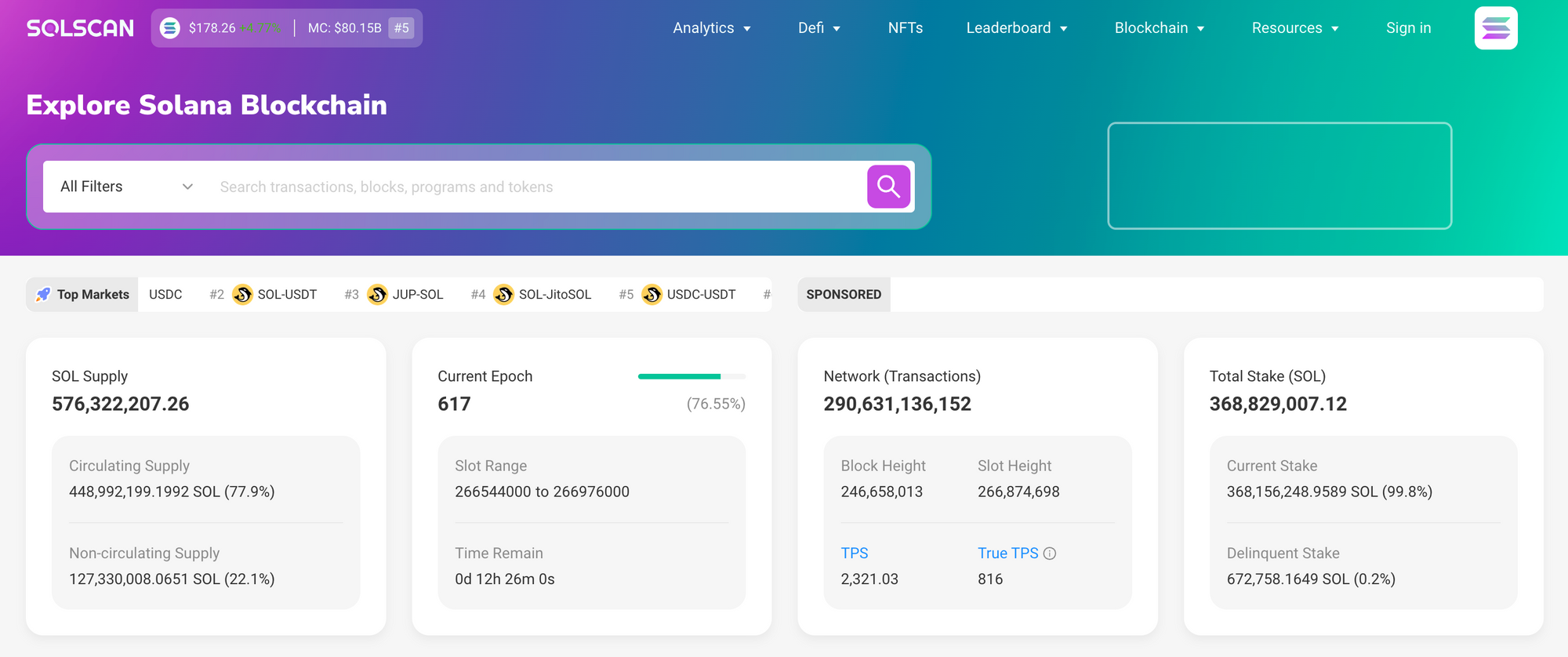
Absolutely. And if you need a solid daily driver for this kind of inspection, try tools that focus on clarity and immediacy. I regularly recommend explorers that let me jump from a transaction hash to a token’s holder list in two clicks, and that highlight program IDs clearly. One site I use often is solscan because it balances depth with speed—though I’m not married to any single product.
How to read a SOL transaction (step-by-step)
Whoa!
Step one: identify the signature and block time. That gives you the when and the unique identifier. Step two: check the status—was it confirmed or finalized—and then view inner instructions to see program calls. Step three: follow token addresses to their mint and holder distribution; that reveals whether the SOL was just moving or being used to mint or swap tokens. Step four: check related signatures for the same payer or programs to detect repeated automated activity. These steps are simple, but do them in order—trust me, it saves time.
Here’s the thing.
For solana analytics at scale, you want aggregated metrics: volume by program, OR by token mint, and clustering of high-frequency wallets. Good analytics dashboards let you filter by these dimensions and export the trimmed dataset. My instinct said manual inspection was enough, but scaling reveals patterns you can’t eyeball. Actually, wait—manual inspection is still crucial for anomalies, though analytics turns that into targeted hunts.
Hmm…
Token tracking also benefits from provenance checks: where were tokens minted, did the mint authority change, are there frozen accounts. On one hand those are technical minutiae; on the other hand they determine whether a token is trustless or administratively controlled. I once overlooked a frozen account flag and paid for it—lesson learned the hard way. So if a tool surfaces governance quirks, pay attention.
Frequently asked questions
How fast are SOL transactions shown on explorers?
It depends on the explorer and the node cluster they use; many show transactions within seconds, but confirmation/finality statuses might update a bit later. My experience is that explorers optimized for speed show pending info fast, while analytic platforms may lag slightly to enrich data.
Can I trust on-chain token holder lists?
Mostly yes, if the explorer exposes associated token accounts and distinguishes wrapped or staked versions. Be wary of dust and exchange custody accounts—those can skew distribution metrics. I’m biased, but cross-checking with multiple views reduces risk.
What’s one small habit that improves analysis?
Always open the program trace. Seriously—it reveals a lot. Also export a CSV when patterns look odd; spreadsheets expose repeating timestamps or identical memo fields that your eyes might miss.
